

The Power of a Clarity Quest
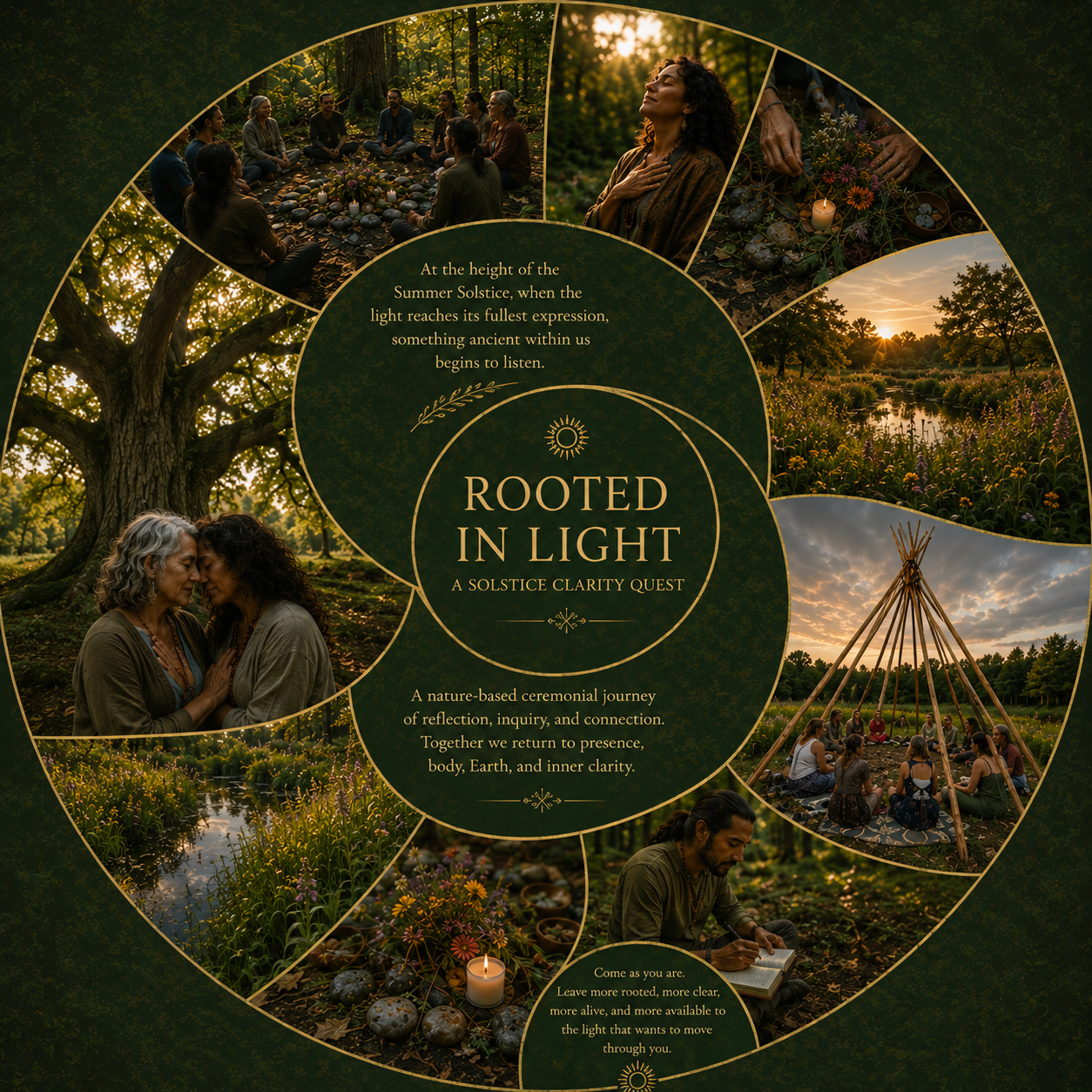
Why Stepping Away May Be the Most Important Step Forward
"The clearest way into the Universe is through a forest wilderness." ~ John Muir
Shantree Kacera, RH. DN., PH.D.
There are moments in life when something within us begins to stir. It may arrive as a quiet restlessness, a feeling that despite our accomplishments, responsibilities, and routines, something essential is asking for our attention. We may find ourselves questioning our direction, our purpose, or the choices before us. We search for answers in books, conversations, courses, and endless streams of information, yet the clarity we seek often remains just beyond our reach. At such moments, what is needed is not more information but a deeper connection to ourselves, to nature, and to the wisdom that arises when we create space for reflection.
A Clarity Quest is an intentional journey into that space. It is a conscious pause from the pace of everyday life and an opportunity to reconnect with what is most authentic and meaningful. Unlike a vacation, which may offer temporary relief, or a seminar, which often focuses on acquiring knowledge, a Clarity Quest invites us to cultivate awareness. It is a journey inward and outward simultaneously, drawing us into deeper relationship with ourselves and with the living world that sustains us.
For thousands of years, people from cultures around the world have sought guidance from nature during times of transition. Elders, visionaries, artists, healers, and seekers understood that the natural world offers something that modern society often overlooks: perspective. The forest does not rush. The river does not force its way forward. The seasons unfold according to their own timing. In the presence of nature, we are reminded that clarity emerges not through control but through attention.
Many of us live in a world of constant stimulation. We wake to notifications, move from task to task, and rarely experience genuine silence. Even our moments of rest are often filled with distractions. Over time, this relentless pace can leave us disconnected from our deeper instincts and inner knowing. We become skilled at managing life but less practiced at listening to it.
The philosopher Blaise Pascal observed this tendency centuries ago when he wrote, "All of humanity's problems stem from man's inability to sit quietly in a room alone." While his words may seem simple, they point toward a profound challenge. We are often uncomfortable with stillness because stillness asks us to meet ourselves honestly. Yet it is within that stillness that clarity begins to emerge.
A Clarity Quest creates the conditions for this encounter. As the mind slows and the nervous system settles, we begin to notice what has been hidden beneath the noise. The questions that once felt overwhelming often become clearer. Decisions that seemed impossible begin to reveal their natural direction. Insights arise not because we force them but because we finally make room for them.
Nature plays a central role in this process. When we walk among trees, sit beside water, or watch the changing patterns of light across a meadow, we enter into a relationship with something larger than ourselves. The concerns that once consumed our attention often find their proper scale. We begin to see our lives within a broader context, and this shift in perspective can be profoundly liberating.
Henry David Thoreau understood the transformative power of stepping away from the ordinary rhythms of society. He wrote, "I went to the woods because I wished to live deliberately, to front only the essential facts of life." His words continue to inspire because they speak to a universal longing: the desire to encounter life directly and authentically.
One of the most remarkable aspects of a Clarity Quest is that it often reveals that the answers we seek have been present all along. Beneath layers of expectation, obligation, and external influence lies an inner wisdom that is uniquely our own. This wisdom does not shout. It speaks quietly through intuition, feeling, imagination, and insight. The challenge is not finding it but creating the conditions in which it can be heard.
Participants in Clarity Quests frequently describe experiences of remembering rather than discovering. They remember what brings them alive. They remember forgotten dreams and neglected passions. They remember values that have become buried beneath the demands of daily life. Most importantly, they remember their connection to the Earth and to the larger web of life of which they are a part.
The poet Mary Oliver captured this relationship beautifully when she asked, "Tell me, what is it you plan to do with your one wild and precious life?" It is a question that cannot be answered casually. It requires reflection, honesty, and courage. A Clarity Quest provides the time and space necessary to engage with such questions deeply.
The journey is not about finding perfect answers or eliminating uncertainty. Life remains dynamic and unpredictable. Rather, it is about developing a deeper trust in ourselves and in the unfolding process of life. It is about learning to listen to the wisdom that arises from stillness, presence, and connection.
In a culture that values speed, a Clarity Quest invites us to slow down. In a society filled with noise, it offers silence. In a world that constantly pulls our attention outward, it calls us inward. Through this process, many people discover a renewed sense of purpose, direction, and belonging.
Ultimately, a Clarity Quest is not about becoming someone new. It is about returning to the person you have always been beneath the layers of distraction and expectation. It is about remembering your place within the living Earth and recognizing that the clarity you seek is not somewhere outside you waiting to be found. It is already within you, waiting to be remembered.
"You do not need to know precisely what is happening, or exactly where it is all going. What you need is to recognize the possibilities and challenges offered by the present moment, and to embrace them with courage, faith and hope."
~Thomas Merton